
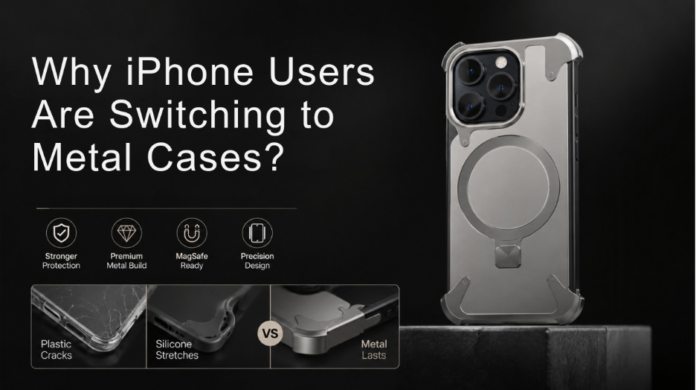


Why Your iPhone Case Might Be Hiding the Phone You Actually Paid For
You spent a significant amount on your iPhone, and then put it in a clear silicone case that’s turned yellow within a few months. It feels sticky in the summer heat, there’s a small crack at the corner from a minor drop, and now the case has to come off every time you actually want the phone to look like what you paid for. This exact frustration is what’s pushing a growing number of Indian iPhone users toward titanium and aluminium metal cases instead.
What Actually Makes a Metal Case Different From a Regular One
A metal case uses titanium alloy or aluminium alloy as its primary structural material instead of silicone, plastic, or leather, which gives it a rigid shape that doesn’t deform on impact. Instead of absorbing a drop by flexing the way silicone does, a metal case distributes the impact force across a rigid frame, protecting the phone’s most vulnerable points, the corners and edges. The feel difference is immediately noticeable too, a silicone case adds a soft, grippy layer that changes how the phone sits in your hand, while a rimless titanium bumper leaves the iPhone’s own body exposed and adds protection only at the edges, so the phone feels almost exactly the way it was designed to.
Why Serious iPhone Users Are Actually Making the Switch
This isn’t really about looks, though metal cases do age noticeably better than the alternatives. A silicone case feels clean and grippy on day one, but by month three in Indian summer heat, it’s usually absorbed skin oils, picked up dust that doesn’t wipe off easily, and developed a tackiness that makes the phone unpleasant to hold. Titanium and aluminium don’t absorb anything, so they feel the same on day three hundred as they did on day one. They also don’t yellow under UV exposure the way clear silicone and polycarbonate do, which is a common complaint in high-UV cities. There’s a practical economics angle here too, a well-made titanium bumper can last five years or more, comparing favourably to replacing a cheap silicone case every year.
A few things genuinely separate a good metal case from one that just looks the part:
- Whether it’s a rimless bumper or a full back cover, since that decides MagSafe and signal compatibility
- Whether the camera cutout is precision-machined so it doesn’t interfere with the lens array
- Whether the material is actual titanium or aluminium alloy, not just a case with a metallic-looking finish
- Whether it’s designed specifically for your iPhone model, since form factors differ across generations
Does Metal Actually Affect Signal or MagSafe?
This is one of the most searched questions about metal iPhone cases, and the honest answer depends entirely on which part of the phone the metal covers. Modern iPhones use antenna designs built into the phone’s own frame, and a case that fully encloses the sides can slightly reduce signal in already weak reception areas, though this effect is marginal in most urban environments with strong network coverage. A rimless bumper that wraps around the edges without sealing them against a solid metal surface has a negligible effect on signal by comparison.
MagSafe works through a ring of magnets on the back of the phone, so a rimless bumper that leaves the back glass completely exposed remains fully MagSafe compatible, there’s simply nothing between the phone’s magnets and whatever accessory you’re attaching. A full metal back cover, on the other hand, blocks MagSafe unless the case has been specifically designed with a cutout or embedded magnets to match. This detailed breakdown of why iPhone users are switching to titanium and aluminium cases goes deeper into signal, camera, and Face ID compatibility across different case designs.
How Metal Holds Up in Indian Heat and Monsoon Conditions
India presents conditions that a lot of case designs, built with European or American climates in mind, simply don’t account for. Car interiors in Indian summer can get extremely hot, and at those temperatures silicone cases soften slightly while clear polycarbonate can develop micro-stress lines. Aluminium and titanium maintain their structural integrity without deforming. During monsoon, humidity in coastal cities regularly climbs high enough that leather cases can absorb moisture and develop mould, while silicone traps moisture right at the phone-case interface. Metal cases, particularly rimless bumpers, allow ventilation at the edges and don’t absorb moisture at all.
Daily carry patterns matter too. Indian pocket habits often mean keys, coins, and a phone sharing the same pocket space, and metal cases handle that kind of scratch exposure far better than silicone or plastic, since the anodised or polished finish resists surface scratches from keys in a way clear cases simply can’t.
Choosing Between Titanium and Aluminium
Titanium is stronger and lighter than aluminium at the same thickness, making it the better material for ultra-thin cases that still need serious durability. Aluminium alloy is more affordable and still holds up considerably better than plastic or silicone for daily use. If weight and long-term toughness matter most, titanium is worth the extra cost. If you’re budget-conscious but still want a genuinely premium feel, aluminium alloy delivers most of the same practical benefits.
A quick way to match the case to your situation:
- Want to feel the iPhone in hand without extra bulk, go with a rimless titanium bumper
- Drop your phone frequently, a full aluminium alloy case gives maximum back and side coverage
- Own an iPhone with MagSafe, confirm the case has a MagSafe-compatible cutout before buying
- Live in a humid coastal city, choose aluminium or titanium over leather, which absorbs moisture
Conclusion
Switching to a metal case isn’t really about chasing a trend, it’s a practical response to how silicone and plastic actually perform in Indian heat, humidity, and daily carry conditions. A rimless titanium bumper solves the most common complaint about traditional cases, that they hide the phone you actually paid for, while still protecting the corners and edges where drops happen most. If you’re ready to see what that actually looks like on your own iPhone, browse GrunX’s full range of iPhone metal cases, or explore everything else the brand offers at GrunX to build out the rest of your setup.