
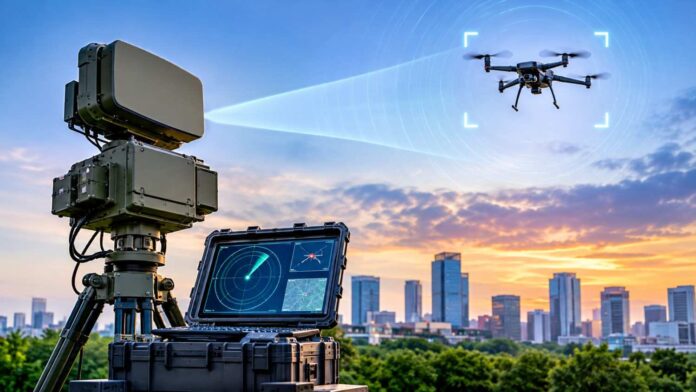


The growing use of unmanned aerial vehicles has created new challenges for organisations responsible for protecting people, property, and sensitive operations. Small drones can approach facilities from unexpected directions, making traditional ground-based security measures insufficient on their own. A modern anti drone system helps address these concerns by combining aerial awareness, threat assessment, and appropriate response capabilities within a coordinated security framework.
Why Traditional Security Measures Need an Upgrade
Conventional security infrastructure generally focuses on physical access points, surveillance cameras, perimeter fencing, and personnel monitoring. While these measures remain important, they cannot independently address every aerial threat.
Unauthorised drones may create security concerns through:
- Unapproved photography or surveillance.
- Entry into restricted airspace.
- Disruption of sensitive operations.
- Potential interference with public safety.
- Unauthorised access to protected facilities.
These challenges make airspace awareness an important part of modern security planning.
What Makes Layered Drone Protection Effective?
A layered security architecture uses multiple technologies rather than depending on one detection or mitigation method.
Detection and identification
Radar, radio-frequency sensing, and electro-optical or infrared technologies can contribute different types of information. Combining available sensor inputs helps security teams develop a clearer understanding of aerial activity.
Tracking and threat assessment
After a possible drone is detected, tracking helps establish its movement and behaviour. Identification supports the assessment of whether the activity is authorised, unknown, or potentially suspicious.
Appropriate mitigation
The response depends on the assessed threat, operating environment, applicable laws, and available authorised capabilities. No single countermeasure is suitable for every situation.
The Role of Integrated Technology
A connected command-and-control platform can bring information from different sensors and response systems into one operational picture. Indrajaal’s SkyOS™ is described by the company as its AI-enabled C5ISRT platform, designed to connect counter-drone equipment and support coordinated threat detection and response.
This approach reflects the wider development of drone defence from isolated equipment towards integrated security ecosystems.
Where Layered Protection Can Make a Difference
Layered counter-UAS planning is relevant to several environments:
- Airports and aviation facilities.
- Energy and industrial installations.
- Military and border locations.
- Government and sensitive public facilities.
- Large commercial and urban properties.
Each environment requires a different assessment of airspace, operating conditions, threat exposure, and regulatory responsibilities.
Frequently Asked Questions
1. What is a layered anti-drone security system?
It is a security approach that combines detection, tracking, identification, and mitigation technologies to manage unauthorised drone activity.
2. Can conventional CCTV detect every drone?
No. CCTV can provide visual confirmation, but dedicated aerial detection technologies may be necessary to identify and monitor drones effectively.
3. Why is sensor integration important?
Integrated sensors provide complementary information, helping security teams build a more complete picture of aerial activity.
4. Is one countermeasure suitable for every drone threat?
No. The appropriate response depends on the drone, the operating environment, the threat assessment, and applicable regulations.