
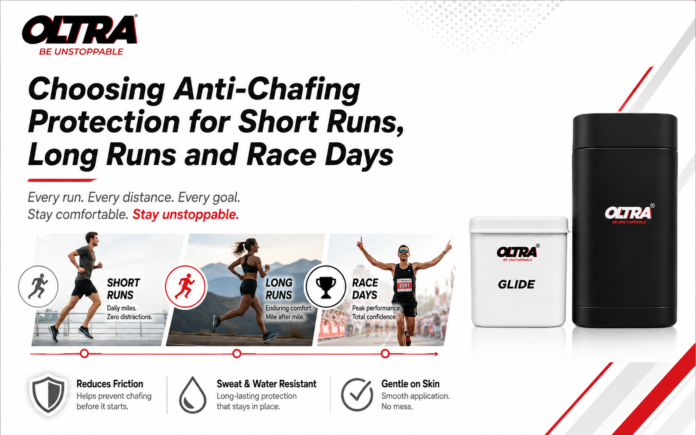


Not every run exposes your skin to the same conditions. Twenty relaxed minutes around the neighbourhood cannot be treated exactly like a three-hour endurance session in warm weather.
That distinction matters when searching for the best anti chafe for runners. Your distance, clothing, weather and equipment determine how much friction protection your routine may require.
Short Runs: Learn Where Problems Begin
Shorter training sessions provide an excellent environment for testing clothing and products.
Runner chafing may not become severe over a short distance, but early warmth or redness can reveal where longer-distance problems are likely to occur.
Use easy runs to test:
- New shorts
- Different shirts
- Running belts
- Hydration vests
- Anti-friction products
- Shoe and sock combinations
If something begins rubbing after 30 minutes, the same issue may be substantially more noticeable after two hours.
Long Runs Require More Preparation
During longer sessions, the number of repeated movements increases dramatically.
Perspiration builds, clothing shifts, fuel belts move and weather may change. This is where the best anti chafing cream for runners needs to work as part of a broader prevention strategy.
Identify Your High-Risk Zones
Typical locations include the thighs, chest, underarms, waist and areas beneath running equipment.
Apply protection before leaving home rather than waiting until these areas begin stinging.
Consider Carrying a Reapplication Option
For extended endurance sessions, being able to reapply protection can be useful.
The decision depends on:
- Expected duration
- Temperature
- Rain
- Historical problem areas
- Amount of equipment carried
A portable product can be especially practical during all-day events.
Race Day Adds Pressure
Race environments encourage runners to change normal habits. They wear a new event shirt, carry unfamiliar nutrition or tighten equipment differently.
That is exactly when runner chafing can appear.
Nothing used on race day should be assumed to work simply because it is marketed for running. Test your exact clothing and protection routine during training first.
Keep Your Preparation Predictable
A simple race checklist can include:
- Tested clothing.
- Familiar socks and shoes.
- Anti-friction protection on known hotspots.
- Correctly adjusted belt or vest.
- Reapplication product if required.
The best anti chafing cream for runners is most useful when applying it becomes as normal as tying your shoes.
Hot Weather and Wet Weather Need Extra Thought
Warm conditions generally produce more sweat. Rain keeps fabric saturated.
Both may increase friction, although the exact effect varies between runners and garments.
If runner chafing appears mainly in summer, compare your warm-weather clothing with what you wear in winter. The problem may involve both moisture and garment fit.
How to Judge a Product
The best anti chafe for runners is not necessarily the product with the most complicated formulation or marketing language.
Practical questions are often more helpful:
- Can you apply it precisely?
- Is it easy to incorporate into your routine?
- Can you carry it if necessary?
- Does it feel comfortable during movement?
- Can you use it on the areas where you personally experience rubbing?
Testing during normal training provides more useful information than choosing solely from packaging.
Combine Product Choice With Clothing Choice
Anti-friction protection cannot completely compensate for equipment that repeatedly moves in the wrong place.
If the same waistband, shirt or pack causes problems every week, fix the underlying source.
Look for clothing that remains stable after it becomes damp. Check seams and elastic edges carefully.
Review Your Routine as Distance Changes
Someone increasing from 5K to half-marathon training may discover new friction areas simply because the body spends more time moving.
Reassess protection whenever you significantly change:
- Weekly mileage
- Long-run duration
- Race distance
- Running kit
- Climate
- Pack weight
Your prevention strategy should evolve with your training.
Why Choose Us
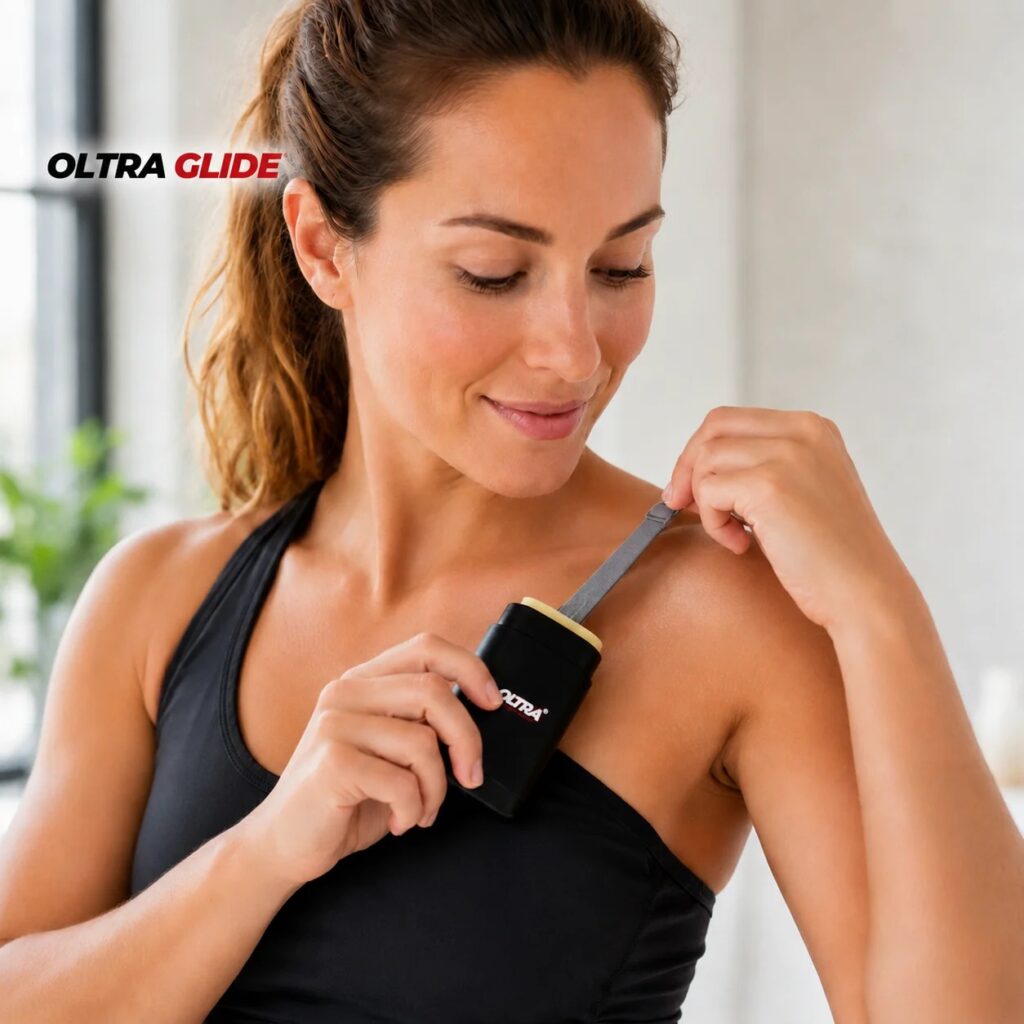
Oltra Glide provides a direct way to prepare areas that experience repeated rubbing before running begins. For athletes whose needs change between everyday sessions and longer events, straightforward application can help keep preparation consistent.
The goal is practical friction management without turning pre-run skin care into a complicated process.
About Us
Oltra develops products for people whose active routines expose the skin to repeated movement. Our focus is on making anti-friction preparation easy to understand and convenient to use before running and other physical activities.
We believe comfort-focused preparation can help remove an unnecessary distraction from training.
Conclusion
The best anti chafe for runners depends partly on the type of running being done. Short sessions are ideal for testing, long runs demand more preparation and race days benefit from routines that have already been proven in training.
Treat chafing prevention as part of your equipment strategy, and update that strategy as your distance and conditions change.