
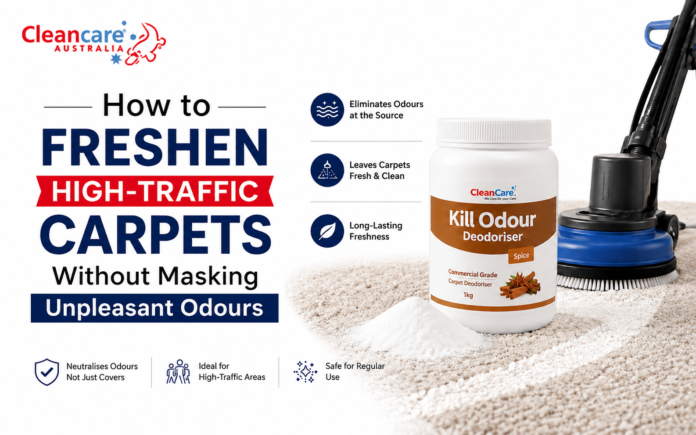


High-traffic carpet has a difficult job. It collects more footwear soil, dust and accidental spills than quieter areas, yet it is often expected to look and smell presentable every day.
A carpet deodoriser can be a useful finishing product, but deodorising should come after basic soil and odour sources have been addressed. Freshness that comes from cleanliness is more sustainable than simply applying a stronger scent.
Where High-Traffic Odours Develop
Typical problem areas include:
- Entrance corridors
- Reception spaces
- Family-room walkways
- Office aisles
- Hallways
- Retail floors
- Carpet beside kitchens or dining zones
- Frequently used rugs
These areas accumulate contamination faster than the rest of the floor, so they need a different maintenance frequency.
Dry Soil Is Often the Starting Point
Foot traffic brings in fine particles that gradually settle into carpet fibres.
Vacuuming regularly removes much of this material before it is crushed deeper into the pile.
Adjust Frequency to Traffic
One weekly vacuum may be adequate for a lightly used room but insufficient for a busy entrance.
Use Entrance Matting Properly
Mats can reduce soil transfer when they are themselves kept clean.
Vacuum Edges as Well as the Centre
Soil often builds up alongside skirting boards, underneath furniture edges and in corners.
Find the Odour Source Before Deodorising
A smell concentrated in one area deserves investigation.
Possible causes include:
- A forgotten beverage spill
- Wet shoes
- Food residue
- Pet contamination
- Damp carpet
- Dirty entrance mats
- Soil below movable furniture
Using a rug deodoriser before removing these sources may create a temporary fragrance while the underlying smell remains.
Treat Local Problems Locally
If one section smells unpleasant, there is rarely a reason to immediately treat every square metre.
Inspect the affected area, clean it appropriately and allow it to dry.
After the underlying problem has been handled, a rug deodoriser may be used as part of the finishing routine when appropriate.
This targeted approach also helps avoid unnecessary product consumption.
Do Not Ignore Moisture
A high-traffic area may be cleaned frequently, which creates another challenge: enough drying time must be available.
Avoid Excessive Spot-Cleaning Water
More water does not automatically remove more soil.
Increase Air Movement
Ventilation can support drying after cleaning.
Manage Foot Traffic
Walking over damp carpet can transfer fresh dirt back onto newly cleaned fibres.
Investigate Persistent Dampness
If an area remains damp without an obvious cleaning-related cause, look for a deeper moisture problem instead of relying on deodorising.
Choosing the Best Deodorising Approach
The phrase best carpet deodoriser should be viewed in context.
The best carpet deodoriser for a high-use area should fit the broader cleaning routine, be appropriate for the surface and be applied according to the manufacturer’s directions.
The strongest fragrance is not necessarily the most appropriate choice.
A Better Maintenance Schedule for Busy Carpet
High-traffic carpet responds well to layered maintenance.
Daily or Frequent Tasks
- Remove visible litter.
- Vacuum obvious soil.
- Inspect spills.
- Clean entrance mats.
Weekly Tasks
- Vacuum edges and lower-traffic sections.
- Inspect for recurring marks.
- Groom the pile where appropriate.
Periodic Tasks
- Perform deeper cleaning based on condition.
- Apply carpet deodoriser as appropriate after cleaning.
- Review whether maintenance frequency matches actual traffic.
This approach keeps small problems from becoming major cleaning jobs.
Why Odours Sometimes Return
A smell that disappears and then returns often indicates that the source was not fully removed.
For example, contamination may have reached:
- Carpet backing
- Underlay
- The floor below
- Rug backing
- Nearby upholstery
A rug deodoriser can freshen a properly maintained surface, but it cannot replace corrective cleaning where deeper contamination is present.
Signs You Need More Than Routine Freshening
Consider deeper cleaning or professional assessment if:
- The same odour repeatedly returns.
- The carpet feels sticky.
- Stains are spreading.
- Dampness remains for an unusual period.
- There has been significant water exposure.
- The source cannot be identified.
- Surface cleaning has already been attempted several times.
Knowing when to move beyond routine maintenance prevents wasted effort.
Why Choose Us
CleanCare Australia offers cleaning products suited to different stages of carpet care. For busy areas, this can help users build a routine covering soil removal, cleaning and freshness rather than expecting one product to perform every function.
Selecting products according to the task can make high-traffic maintenance more organised and easier to repeat consistently.
About Us
CleanCare Australia supplies cleaning products for customers managing everyday and professional environments. Carpet maintenance is one area where practical product selection can make a noticeable difference because different problems—soil, stains and odours—often need different responses.
Our range supports users who want to approach those cleaning tasks systematically.
Freshness Should Be the Result of Maintenance
High-traffic carpet will always require more attention than rarely used flooring. The key is to remove soil and contamination early rather than waiting for a strong odour.
Use carpet deodoriser after routine cleaning where appropriate, and use rug deodoriser as part of maintaining frequently used rugs. The best carpet deodoriser supports an already sound cleaning routine instead of covering up the reason the carpet smells unpleasant in the first place.